
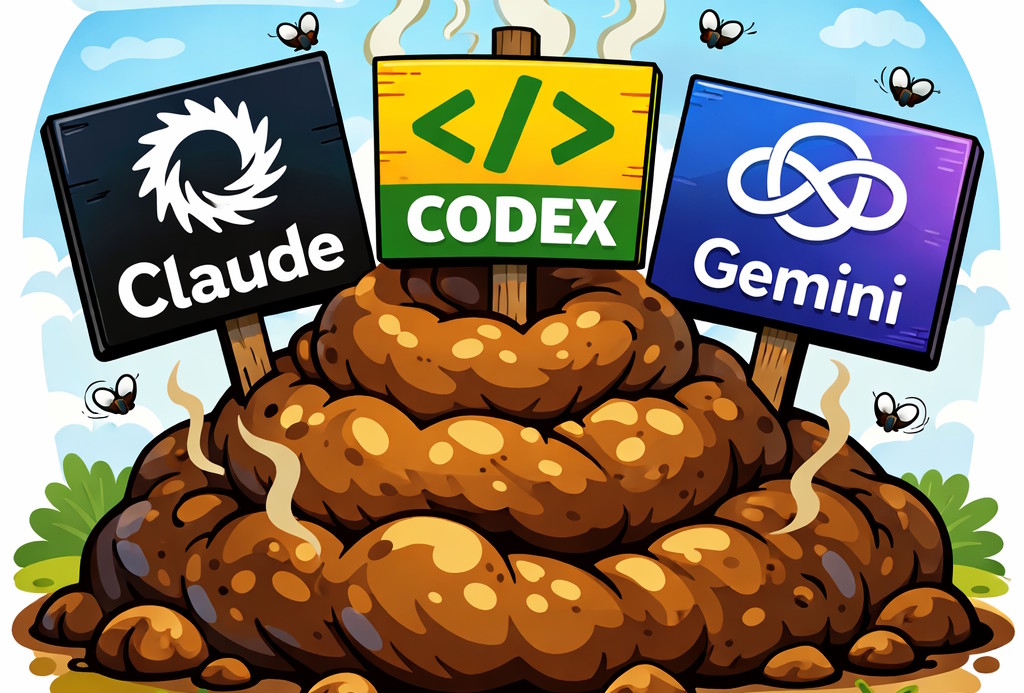
For a few months now, we've been using Claude at work. I've also been playing around with Claude and Codex in a personal capacity. Work is web-based SAAS software; personal is C++ games. Two quite different genres, and also quite a bit different in terms of results, too - so this is my honest assessment.
It's worth skipping over finer details of the work-related one, because - so far - Claude has done exactly what I've needed it to, and very well. Finding bugs, it's second-to-none. Implementing plans: no complaints. There is a big distinction to be made though between work/personal, however - and this is actually something that validates how much an experienced developer is needed to steer these things along. And that distinction is that I've been doing web projects for over twenty years now. I know what I want, where I want it, roughly how it should look (or at least, whether I'm happy with how it looks after the job has finished). I also fully understand the output, and push for Claude to ensure it's clean, documented, etc.
With C++ however, this is still "new" to me. I've actually been playing with C++ far longer overall, since my mid-teens - but only bits and pieces here and there, not every day. Often I'll not even touch it for years. Add things like OpenGL and general game programming principles on top, along with physics, maths, audio, graphics etc -and quickly I'm out of my depth. So whilst I can get by, I'm still very much at a point where I'm often baffled, and either read tutorials or hit Google. So the prospect of using Claude at home was quite appealing.
I'm not even going to mention anything further about Gemini: I tried it for a few hours, and it was embarrassingly terrible.
The first issue
I first starting messing with Claude at home for Skiddies, my racing game. Progress was already really good, but I brought Claude in to help with some bits and pieces. Within a few days, I'd hit my first real problem: disassociation. I completely went from enthusiastic about the code to literally not giving a shit - I was nudging Claude to pile all sorts in. Fun for a bit, until I hit some blockers that we could not resolve.
After a short break, I went back to basics, got my head back into the code and finally resolved it the old way, and told myself that if I was to use Claude again, it'd be for "behind the scenes" stuff, not my main logic. I wanted to keep the fun for myself.
Lightning strikes twice
Squishies is, for the most part, a FAR simpler game, with the exception of multiplayer. So rather than going old-school, I got Claude & Codex involved to help out. We carefully split the game into two logical units and, a few days and several sessions later, had a genuine multiplayer game on the go. Which was exciting, until I properly stepped back and looked at what the impact was on my main code. The fairly organised chaos was now ripped into pieces, with duplicate logic and a huge amount of over-engineering. I tried using both Claude and Codex to unpick some of the mess to push it towards what I'd find easy to work with, but little joy.
Claude and Codex together isn't a terrible idea; they can someone aggressively tear into eachother's plans, review changes and find things you may have missed, etc. But when the game gets into a tangle, it's almost like both just trip up over the different approaches, get confused and can't really resolve a proper plan to clean up effectively. Both have different approaches, different design patterns they default to etc, so whilst they'll often quickly "agree" with eachother after a couple of rounds, carrying the plans out in a way that's considerate - that's a different story where they both seem to just do what they want.
Going forward
I've backed way off. I've spent a good bit of time trying to re-organise the code myself the way I feel most comfortable with it, and whilst there's still a fair bit of undesirable stuff left, at least things are back in my own court.
It's worth reminding myself too that I'm not getting paid for the personal stuff; at the moment, it's a hobby. For fun. For learning. Is there really any fun/learning involved when you're essentially dictating to something what you want, and getting constantly frustrated/annoyed with it? Are you really learning anything when everything's just thrown into your code and you then just move on if it appears to work? For me - that's a big no.
So the question really - will I use Claude/Codex still? Probably. Will I let it loose on anything more than perhaps some mundane features or complex bugs? Unlikely.
The verdict
- Claude & Codex for professionals or those with strong experience: a great helping asset, as long as you remain close to the code. Great for quick and dirty proof of concepts, too.
- Claude & Codex for hobbyists out for learning/fun: mostly shit.
In any case - keep it on a tight leash. Remain close to the code. And for stuff unfamiliar to you: make a point of researching first, use Claude/Codex as a last resort.